Adolescent Pregnancies
Healthcare Professionals, “Think Globally, Act Locally.”
A Global, Social, and Medical Healthcare Crisis
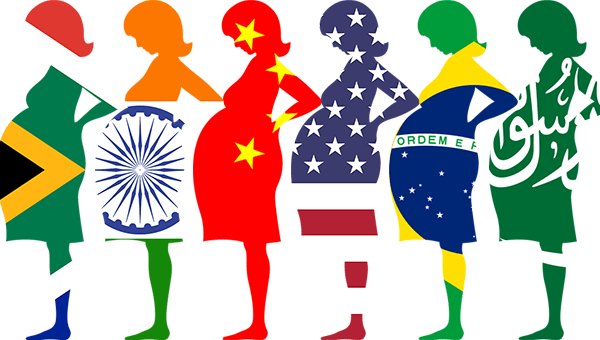
Burden’s of Teen Pregnancy
Complications during pregnancy and childbirth are the leading cause of death for girls globally.
The top two highest burden’s of teen pregnancy are unsafe abortions and maternal hemorrhage, which can ultimately lead to death. Others include sepsis and hypertension. Approximately 1 million women face life-threatening complications each month, many young women and children themselves. Health care providers should be aware of cultures and beliefs in their area so they can give the best care possible. (Borgen Magazine, 2014)
Around 25 million unsafe abortions occur each year, most of which occur in developing countries where abortion may be illegal or unavailable. An unsafe abortion is performed by those lacking the necessary skills, an/or an environment lacking in medical standards. This life-threatening procedure can cause long-term damage or disease due to incomplete abortion, sepsis, bleeding, and injury to the internal organs, such as the uterus. Early childbearing can have increased risks to babies, as well as their adolescent mothers. Risks include low birth weight, preterm delivery and other severe neonatal conditions. (Wikipedia, 2020)
An unwanted pregnancy can result in the inability to finish education and find unemployment, while being left for poverty. The cycle can continue with the infant, and statistics can increase thereafter.
“At least 10 million unintended pregnancies occur each year among adolescent girls aged 15–19 years in the developing world.
Complications during pregnancy and childbirth are the leading cause of death for 15–19-year-old girls globally.
Of the estimated 5.6 million abortions that occur each year among adolescent girls aged 15–19 years, 3.9 million are unsafe, contributing to maternal mortality, morbidity and lasting health problems.
Adolescent mothers (ages 10–19 years) face higher risks of eclampsia, puerperal endometritis, and systemic infections than women aged 20 to 24 years, and babies of adolescent mothers face higher risks of low birth weight, preterm delivery and severe neonatal conditions.
Approximately 12 million girls aged 15–19 years and at least 777,000 girls under 15 years give birth each year in developing regions.”
-World Health Organization, 2020
Risk Factors
Leading Risk Factors for Adolescent Pregnancies

At least 10 million unintended pregnancies occur each year for girls aged 15-19 in developing regions. Adolescent Pregnancies, while a global problem, are more likely to occur in marginalized communities. In many societies, girls are under pressure to marry and have children early. (Revere Health, 2018)
In the least developed countries, at least 39% of girls marry before they are 18 years old, and 12% before they are 15. Girls can often choose to become pregnant because of their lack of educational and employment prospects, and cultural beliefs. (Kirchengast, 2016)
Countries that do not give access to contraceptives due to lack of resources, religious beliefs, and restrictive laws is a huge risk for youth pregnancies. Adolescents may lack the autonomy or knowledge to ensure the consistent and correct use of contraception.
Women also have other barriers in accessing contraceptives, such as transportation, marital status, strict laws, health worker bias, and financial constraints. An additional risk of unintended pregnancy is sexual violence. More than a third of the girls in some countries claim that their first sexual encounter was coerced or forced.
Although rates of teen pregnancies have been reduced in the United States, they are still too high. Learning how to speak to your patients, and teach about contraceptives early, can help to continue reducing teen pregnancy rates in our own communities.
-AFP News Agency

Costs and Consequences
“Years of healthy life lost due to adverse pregnancy and childbirth outcomes among adolescent mothers…”
-AIMS Public Health, 2018
Death is the largest consequence in teen motherhood, as pregnancy and childbirth complications are the leading cause of death in girls aged 15-19 years old. The chances for issues during the pregnancy are significantly higher than those of an adult woman. (NCBI, 2018) There is also a higher likelihood of a teen mother in a developing country reaching out for an unsafe abortion, which can cause death to the mother, or long-term health problems.
Social and economic consequences may include stigma, rejection, violence by partners, parents and their peers as they are more likely to experience violence if they become pregnant before the age of 18. Teen pregnancy may jeopardize the young woman’s future, education and employment opportunities, and their children are more likely to have teen pregnancies as well.
When childbearing precedes school completion, the infant requires a significant amount of time and energy, this interferes with studying and attending classes. Many teens will have to drop out to tend to their infants. Lack of education leads to fewer work opportunities, leading to significantly less financial security for themselves, their family, and their children.
In the United States, the average cost of teen pregnancy and care for the first year of infancy is $16,000. This is costly, both for the adolescent and tax payers, as they are more likely to be on state assistance. (Kirchengast, 2016)
Key Players
Multiple foundations are working towards education and awareness. They have several challenges, including reaching the population in need of contraception while fighting strict laws, culture, beliefs, and unequal rights of women and children.
WHO, World Health Organization, works with partners to advocate for attention to adolescents such as, “WHO’s Guidelines for preventing early pregnancy and poor reproductive outcomes in adolescents in developing countries.” (WHO, 2019)They provide information, tools and resources to affiliates and other nongovernmental organization to prevent adolescent pregnancy.
Future goals of WHO:
World Health Organization collaborates with Family Planning 2020, a global partnership to give access to contraceptives to all women and girls by the end of 2020. (WHO, 2019) WHO works closely with partners to contribute to the global efforts of ending children becoming wives and mothers. Some of these partners are UNICEF, UNFPA and UNWomen, for example, to end childhood marriages.
UNFPA, United Nations Population Fund, supports the reproductive health of women and children in over 150 countries. They provide reliable access to contraceptives, training to health workers, and sex education. They also work to end gender-based violence, female genital mutilation (3 million girls annually), and child-based marriage. Their mission statement is, ” to deliver a world where every pregnancy is wanted, every childbirth is safe, and every young person’s potential is fulfilled.”
Future goals of UNFPA:
UNFPA would like to end the unmet need for family planning, as 214 million women do not have access to modern family planning. They also aim to end preventable maternal death with the right to proper health care, and to end gender-based violence and harmful practices. (UNFPA, 2019) This commitment is tied in to Plan International, and their goal date is set for 2030.
Plan International is an organization that strives to advance the rights of children and provide equality for girls. They work to fight discrimination of girls in education, health, work and family life and provide gender equality. Some of their other goals are: to end all violence against children, end child marriage (which would affect an estimated 70 million girls over the next 5 years), insure all children complete nine years of quality, free and safe education, have a birth registration and legal identity for every child, and all girls and boys to have a voice and effectively participate in decisions affecting them. (Plan International, 2019)
Future goals of Plan International:
Plan International works with Global Goals, or Sustainable Development Goals for the year 2030.They want to change policies and practices so that their goals are implemented by national governments to meet the needs of girls and young women. Types of programs revolve around the right to education, child protection, and youth decision-making and accountability. (Plan International, 2019)
While helping to prevent teen pregnancy should be a goal for medical professions, they should also be a support to helping teens overcome their early pregnancies and out of poverty.
World Health Organization

UNFPA

Plan International
Resources, Citations, and Credits for this blog
3 Risks of Teenage Pregnancy – Revere Health: Live Better. (2018, May 21). Retrieved from https://reverehealth.com/live-better/risks-teen-pregnancy/
A Look at Global Teenage Pregnancy. (2014, April 16). Retrieved from https://www.borgenmagazine.com/look-global-teenage-pregnancy/
About us. (2016, September 30). Retrieved from https://www.unfpa.org/about-us
Adolescent pregnancy. (n.d.). Retrieved from https://www.who.int/news-room/fact-sheets/detail/adolescent-pregnancy
Aung, E. E., Liabsuetrakul, T., Panichkriangkrai, W., Makka, N., & Bundhamchareon, K. (2018, December 7). Years of healthy life lost due to adverse pregnancy and childbirth outcomes among adolescent mothers in Thailand. Retrieved from https://www.ncbi.nlm.nih.gov/pmc/articles/PMC6322997/
Beyond the Data: Reducing Teen Pregnancy in the United States. (2013). Retrieved from https://youtu.be/1-8YyP5N8-w
Kirchengast, S. (2016, October 26). Teenage Pregnancies: A Worldwide Social and Medical Problem. Retrieved from https://www.intechopen.com/books/an-analysis-of-contemporary-social-welfare-issues/teenage-pregnancies-a-worldwide-social-and-medical-problem
Pregnant at 15, the teenage mothers of Romania. (2016). Retrieved from https://youtu.be/teBNAyYboPI
Sawhill, I. V. (2016, July 28). What Can Be Done to Reduce Teen Pregnancy and Out-of-Wedlock Births? Retrieved from https://www.brookings.edu/research/what-can-be-done-to-reduce-teen-pregnancy-and-out-of-wedlock-births/
Teenage Pregnancy in Nigeria: Health Risks and Poverty. (2009). Retrieved from https://youtu.be/GaotlrIsG-o
The Global Goals. (n.d.). Retrieved from https://plan-international.org/sustainable-development-goals
Unsafe abortion. (2020, February 7). Retrieved from https://en.wikipedia.org/wiki/Unsafe_abortion
Unsafe Abortion: A Forgotten Emergency. (2019). Retrieved from https://youtu.be/A51vqjzRMg4
 Burdens of Disease in Maternal and Reproductive Health